

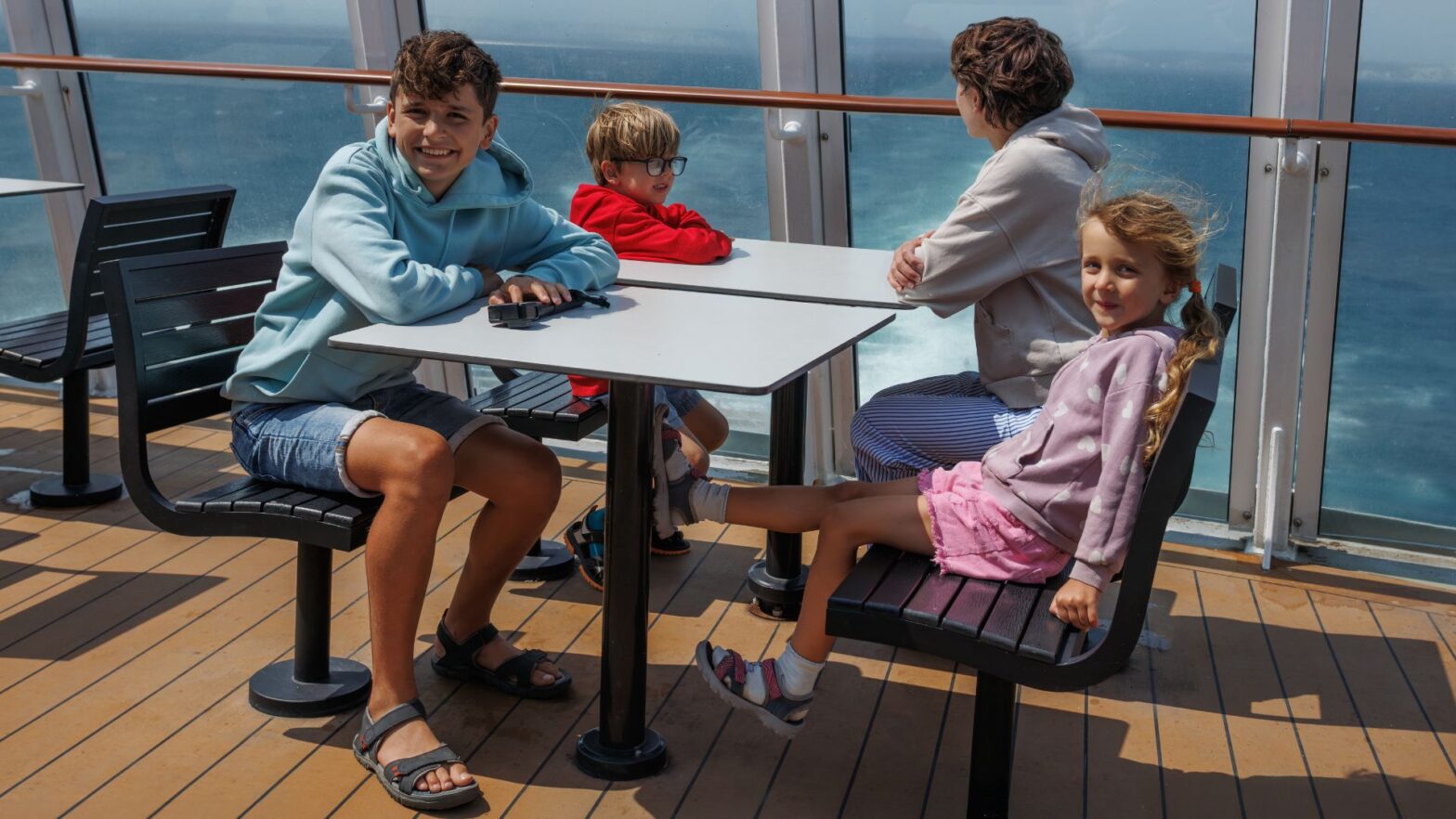
There’s nothing quite like setting off for a voyage at sea. Even if the journey is short, it evokes a certain magic. So if you’re travelling to Europe this year or next, why not consider going by ferry? Sailing from the UK to continental Europe offers an often overlooked but rewarding alternative to flying or taking the train. For holiday-makers looking to unwind as they head toward their destination, ferries provide a uniquely relaxed experience with practical benefits.
Some Key Ferry Routes and Sample Prices
Ferry services operate across multiple routes the UK to the continent. These routes are run by established providers – including household names like P&O – offering crossings at competitive prices. They are often especially good value for families taking their car. Here are some example return prices for for a family of 4 travelling on 25th July 2026, booked in late 2025 or early 2026:
| Departure Port | Destination Port | Operator | Return Fare, 14nts |
| Dover | Calais/Dunkirk, France | DFDS, P&O Ferries | Starting from £188 |
| Newhaven | Dieppe, France | DFDS | Starting from £282 |
| Portsmouth | Caen, France | Brittany Ferries | Starting from £553 |
| Portsmouth | Bilbao, Spain | Brittany Ferries | Starting from £1229* |
| Newcastle | Amsterdam (IJmuiden) | DFDS | Approximately £750* |
| Portsmouth | St Malo | Brittany Ferries | Approximately £1071* |
| *4-berth cabin included. |
These fares include space for a vehicle and a family of 2 adults and 2 children under 16 or 18, depending on the ferry company. Prices can change considerably depending on the time of booking and season of travel. Most routes have early booking offers for the summer and for peak times it is worth booking early. That’s not just for the best deals, but for availability too.
Very few travel arrangements are perfect, and that’s true of ferries as well. Some compromises are inevitable, so it’s worth weighing up the pros and cons.
Advantages of Travelling by Ferry
-
Bring your own vehicle
For families, groups, or anyone who values flexibility, ferries allow you to bring your own car. This means no rental costs on arrival and the freedom to explore your destination without relying on taxis or public transport. This is handy too if you want to take bicycles – taking bikes by plane is fiddly, cumbersome, and comes at a cost.
-
A relaxed onboard experience
Unlike cramped plane cabins or fixed train seats, ferries provide open spaces to move around. Passengers can enjoy amenities like restaurants, lounges, and bars. With sea views and fresh air, the journey itself becomes part of the holiday.
-
Generous luggage allowance
Most ferry operators have minimal restrictions on luggage. Whether you are packing sports equipment, camping gear, or extra holiday clothes, ferries allow you to carry what you need without hefty baggage fees.
-
Direct access to cities and scenic regions
Many ferry ports are located close to major cities or popular tourist areas. For instance, ferries to Rotterdam or Amsterdam connect travelers directly to the heart of the Netherlands, while ports like Caen and Dieppe provide easy access to Normandy’s picturesque countryside.
-
Eco-friendly travel
Compared to flying, ferries offer a more sustainable option. With the push for greener travel, taking the ferry can help reduce your carbon footprint while still enjoying a convenient journey.
Potential Ferry Disadvantages to Consider
-
Longer travel times
Ferry journeys take significantly longer than flights. For example, a Dover-Calais crossing takes 90 minutes, while overnight routes to Spain or the Netherlands can take 12 to 24 hours. Travelers with tight schedules might find this inconvenient.
-
Weather-related delays
Sea travel is more vulnerable to weather conditions. Rough seas can make the journey uncomfortable and, in extreme cases, cause delays or cancellations.
-
Cost considerations
While ferries are often affordable, peak-season prices do increase. Cabins, meals, and onboard services can also add to the total expense.
-
Seasickness
For passengers prone to motion sickness, ferry travel can be uncomfortable. Modern ferries are generally stable, but it is worth preparing if you are sensitive to rough waters.
Transitioning to Holiday Mode
One key difference between ferries and other options lies in the journey itself. Flying often comes with crowded airports, tight security queues, and potentially stressful boarding. Trains, while usually efficient, rarely provide the chance to stretch out and relax.
By contrast, ferries offer a more deliberate and calming start to a holiday. From the moment you drive onto the ferry, the pace slows. There is time to enjoy a meal, take a walk on deck, or simply relax with a book as the coastline fades from view. For families, ferries transform travel into part of the adventure, with space for children to play and unwind.
Additionally, the slower nature of ferry travel provides a clear mental shift: you are no longer at work or in the rush of daily life. Instead, you are en-route to your holiday. Whether sipping a coffee in the lounge or watching the sunset over the Bay of Biscay, the journey becomes an opportunity to decompress and prepare for what lies ahead.
Is Ferry Travel Right for You?
Choosing the best way to travel depends on your priorities. For those who value speed, flights may be the better option. However, if you prefer comfort, flexibility, and a more relaxed start to your trip, ferries offer clear advantages.
Travelling by ferry allows you to avoid airport stress, carry what you need, and enjoy the freedom of bringing your car. It may take a little longer, but that time can be spent enjoying the journey rather than enduring it.
In an age where holidays often feel rushed, ferries invite us to slow down and savour the start of our adventures.
By Declan Morton, writer and editor at Essiell Ltd and Money4Travel.
More about the author.

