

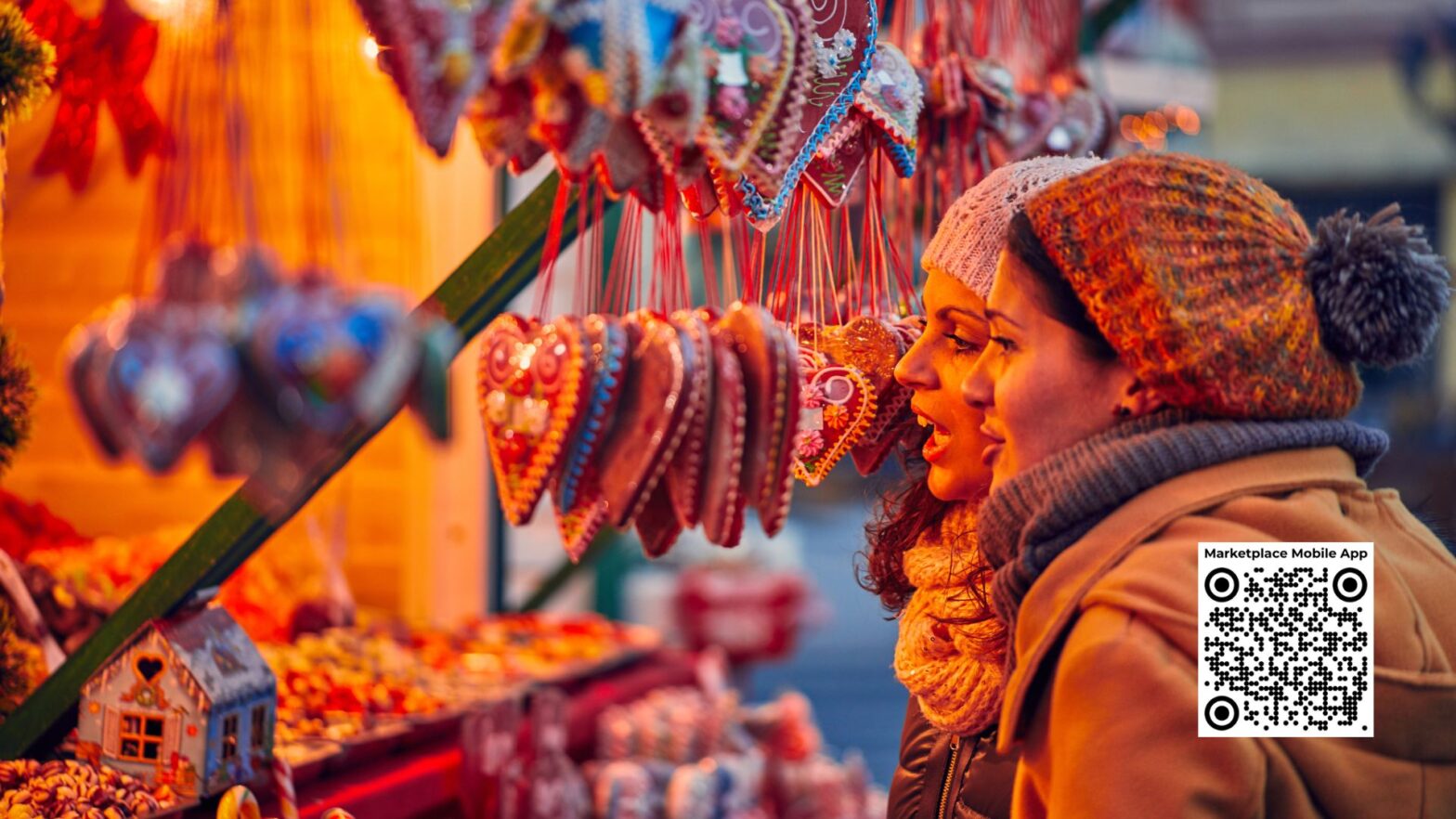
For many UK travellers, visiting Europe’s Christmas Markets has become a ritual to look forward to, and a day or two to indulge in a bit of Christmas magic. And while homegrown versions are great if they’re local, there’s nothing quite like the real taste of Europe on a sharp winter’s day. This article looks at some of the practicalities of these events, and how festive travellers will find that cash in their pocket makes life easier amid the bustle, lights, and mulled wine of a real Christmas Market.
Spoilt for Choice
Across Europe and Scandinavia, there are dozens of good Christmas Markets to choose from. Traditionally they ran for the Christian season of Advent (the preparation for Christmas) which starts in late November or early December. Today, most run from late November through to Christmas and some to the New Year.
Here we focus on three Christmas Markets which are easily accessible from the UK: Bruges, Cologne and Vienna. Each of these beautiful cities makes for a great weekend away, or a mid-week break for those with more time. So, picture medieval squares with lights, music, the scent of mulled wine, and an enticing array of Christmas gifts and speciality foods.
And while many market stalls now take cards as readily as retailers at home, carrying cash remains practical for the season’s minor but frequent transactions: food & drink (and deposits on mugs for mulled wine), other small purchases, and tips.
A new reason to rediscover Bruges
Few settings are as photogenic as Bruges during its Winter Glow festival. Between 21st November 2025 and 4th January next year, two main markets, on the Grote Markt and Simon Stevinplein, form the centrepiece of a city-wide celebration of light. Eurostar services to Brussels and a short onward train make Bruges one of the easiest continental destinations to reach from the UK.
Belgium is thoroughly digital, yet even here cash can be convenient. Organisers note that cup deposits of €3–5 are usually refunded in cash, and public toilets typically charge €0.50–1. Most market stalls take cards, but queues shorten when shoppers pay in cash for small items such as waffles, roasted nuts or chocolate samples.
Typical prices in 2025:
- Glühwein (mulled wine): €5–6 plus a deposit for the cup
- Waffles or frites: €5–€7
- Cappuccino: €3.80–€4.50
- Beer (0.5 L): €6.00
- Taxi fare: €2.70 as the base fare, then about €2.80 per km
Public transport on De Lijn costs €3 per 60-minute ticket or €7.50 for a day pass. Most buses accept contactless cards, but having a few coins helps on older machines. Tipping in Bruges is minimal; round up or leave 5 per cent in cash for good service.
Cologne’s Christmas Markets and the enduring “Pfand”
Germany has taken card payments to heart but, as elsewhere, Christmas Markets remain happy with notes and coins, especially for small transactions. Cologne hosts at least seven major markets, from the spectacular Weihnachtsmarkt am Kölner Dom beneath its Gothic cathedral, to the smaller Harbour Market by the Rhine.
The reason cash persists is simple: the Pfand, or deposit system. Visitors pay €3–5 extra when buying Glühwein or cocoa, refunded when the mug is returned. In busy crowds, the quickest option is to hand over cash and take change rather than queue for a card terminal, especially for the refund.
Transport within Cologne is reliable and reasonably priced. A single KVB tram ticket costs around €3, or €8.80 for a 24-hour pass. Taxis begin at €4.90, followed by €2.60 per kilometre, and a small tip is normal.
Everyday prices are moderate:
- Beer (0.5 L Kölsch): €4.60
- Cappuccino: €3.70
- Bratwurst or Reibekuchen: €5–€6
- Soft drink (330 ml Coke): €2.70
Adding to Cologne’s charm are small artisan stalls where gifts are still priced for cash simplicity. Most Germans keep some notes in their wallet; visitors will find that €40–50 in small denominations is plenty for snacks and souvenirs. Larger purchases may need more and cash is often acceptable for those too.
Vienna’s elegance, and practical euros for Christmas Markets
Vienna’s Christkindlmarkt at Rathausplatz is among Europe’s grandest, framed by the illuminated towers of City Hall. Other markets at Schönbrunn Palace and Belvedere extend the festivities until 6th January 2026. Flights from London take just over two hours, and Austria’s capital combines grand imperial architecture with fine cafés and modern efficiency.
Contactless payment is nearly universal, but the Vienna Tourist Board advises visitors to carry both cash as well as cards. Reasons include tips and minor spends such as roasted chestnuts or festive pastries, plus the common use of mug deposits (€4–€5). For a quick mulled wine, paying cash can halve transaction time.
Indicative 2025 prices:
- Punch or Glühwein: €6–€8 plus €4 deposit
- Pretzel or sausage: €4–€6
- Beer (0.5 L): €5.00
- Cappuccino: €3.90
- Metro ticket: €2.40; 24-hour pass €8.00
Taxis start at €3.80, with fares of about €1.50 per kilometre for the first five kilometres. A 5–10 per cent tip is customary and generally given in cash.
Vienna’s markets feel more formal than those in Cologne or Bruges, yet they share the same pattern: electronic payments are common until tradition intervenes. Cash remains the quickest way to reclaim a mug deposit or reward a carol singer.
Comparing costs and customs
At a practical level, Christmas Markets are surprisingly consistent. A mug of Glühwein costs €5–€8, food stalls cluster around €5–€7 per item, and each city applies a €3–€5 cup deposit. Café coffee prices hover near €4, and beer ranges from €4.50 to €6. Tipping norms are similar to in the UK, typically rounding up or adding 5–10 per cent in cash.
Transport costs also stay within a narrow band: €3–€3.50 for single urban tickets, €8–€9 for a daily pass, and €2.50–€3.00 per kilometre for taxis.
Overall, for a couple spending a day at the markets, a realistic daily budget is €70–€100 per person, plus your costs of travel and accommodation. Cards handle some of that spending, but cash brings convenience. And, when network signals drop, terminals freeze, or small vendors queue, cash keeps things moving.
Why cash still matters at Christmas Markets, and how to plan ahead
Despite Europe’s embrace of digital payments, Christmas Markets remain one of the few truly cash-friendly experiences. Across the three cities, cash helps with:
- Pfand deposits & refunds for drinks
- Small-value purchases where card minimums apply
- Toilets and tips, which are usually cash only
- Faster transactions when it’s busy
- Security – those odd occasions when you may not feel comfortable getting a card out.
For UK travellers, the challenge of buying Euros is about value. Airport bureaux de change are expensive, and changing money once you’ve arrived can carry the triple impact of poor exchange rates, ATM charges, and charges from your own card provider.
That’s where a service like Money4Travel has the edge. Travellers order euros online, collect them locally at partner bureaux, and lock in the best local exchange rate before they leave home. The guarantee is that you’ll get the best exchange rate within a ten minute drive of your postcode. On return, there’s a buy-back guarantee for any leftover notes, and Money4Travel’s “Pips” loyalty scheme rewards repeat travellers. The process provides flexibility without pressure, providing an ideal fit for those planning a mix of card and cash spending.
A festive balance
Across Bruges, Cologne, and Vienna, Christmas Markets frequently accept card payments but you’ll struggle if you have no cash at all. A €10 note might buy the final round of Glühwein, cover a tip for the taxi home, or pay for a handmade ornament where the stall’s terminal has frozen in the cold.
For UK visitors, combining contactless convenience with Euros in cash ensures that every festive moment, from choir songs to candlelight, proceeds smoothly.
Christmas Markets may have entered the contactless age, but a little cash still smooths the way for a relaxed and enjoyable experience
By Declan Morton, writer and editor at Money4Travel – the online service for foreign currency sales in the UK. More about the author.
Prices quoted are accurate when published, but may change.
Useful websites: Visit Bruges – Winter Glow 2025/26, De Lijn fares 2025 , Köln Tourismus, Cologne Christmas Markets , KVB Köln – Ticket overview, Vienna Christmas Market, Vienna Tourist Board , Wiener Linien – Fares 2025, Numbeo Cost of Living information – select your city

